What is in an Amanita gummy? The label and the laboratory
In 2024 the FDA tested a recalled line of amanita edibles and found more in the packets than the label admitted. What that record says, and what is in a pouch from here.
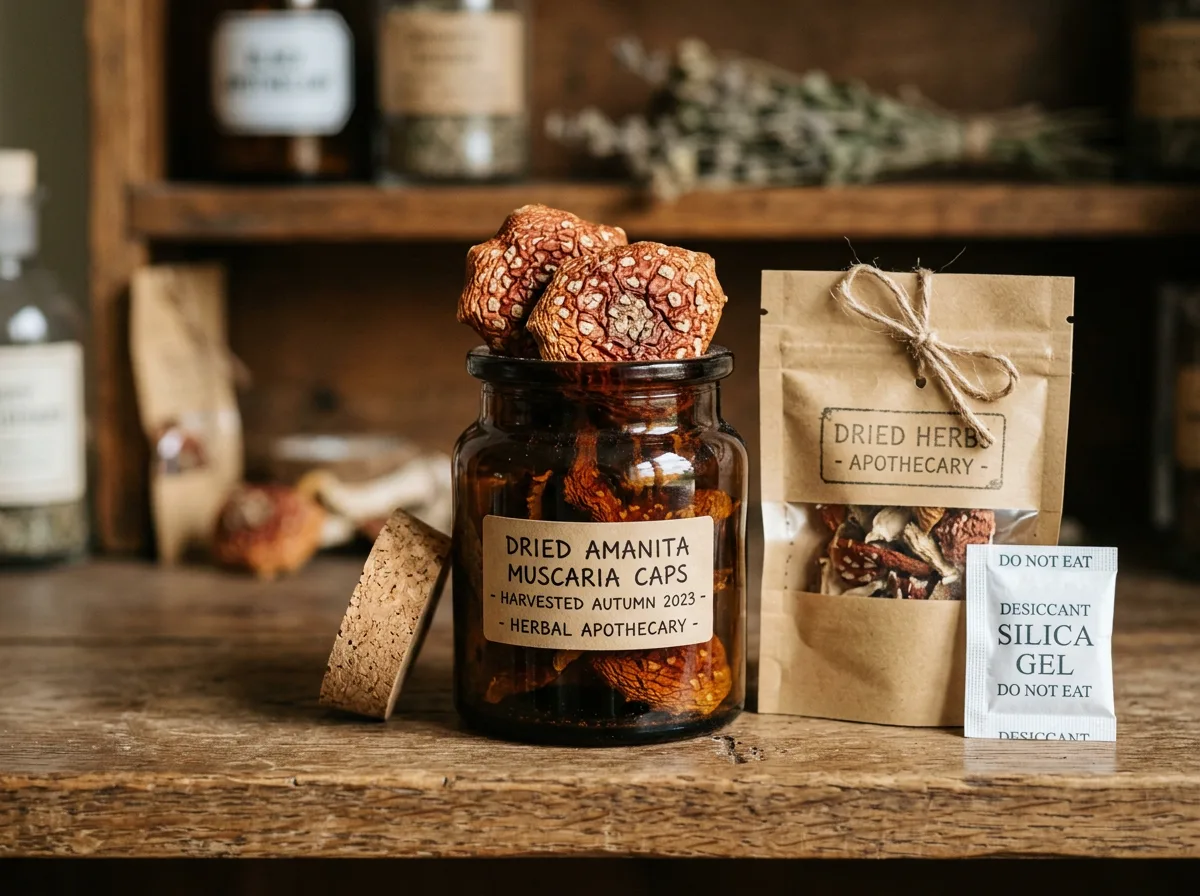
An amber jar and a sealed kraft pouch of dried Amanita muscaria caps on a wooden shelf, a desiccant sachet lying beside them
TL;DR
- The documented case runs the opposite way to the one people expect. The laboratory found more in the package than the label admitted.
- Diamond Shruumz, 2024: every Infused Cone, Chocolate Bar and Gummy recalled. FDA testing found muscimol that no ingredient list mentioned, along with a synthetic analogue of psilocybin, the prescription drug pregabalin, and kava.
- The mushroom cannot be farmed and a consistent extract is difficult and dear, so much of what is sold as amanita is laboratory-made muscimol rather than mushroom.
- In December 2024 the FDA told industry that Amanita muscaria is not an approved food ingredient. That is our own position, put by somebody else: this is a specimen, not food.
- No gummies here, and no capsules, extract or tincture. One ingredient, nothing added and nothing taken out. Botanical specimen · not for consumption · 19+.
A mushroom has no ingredient list
Nobody asks what is in a mushroom. The question turns up the moment the mushroom has been made into something else - pressed into a gummy, poured into a chocolate bar, rolled into a cone - because a manufactured product carries a list, and a list is a statement about contents that somebody can go and check.
In 2024 somebody did. What the checking found is why this article exists, and it does not run the way people assume it will. The usual worry about an edible sold as amanita is that there is hardly any mushroom in it. The documented case is the other way round.
Diamond Shruumz, and what the testing found
In June 2024 Prophet Premium Blends recalled everything it made under the Diamond Shruumz name: Infused Cones, Chocolate Bars and Gummies, every flavour and every lot.
Then the samples went to a laboratory. FDA testing found muscimol - the compound this species is known for - in nine of the chocolate bar samples and in infused cones as well, and found both muscimol and ibotenic acid in a raw ingredient used to make some of the products. The labels declared none of it. The same testing identified a synthetic analogue of psilocybin, the prescription anticonvulsant pregabalin, and kava. The Blue Ridge Poison Center at the University of Virginia ran a separate test on five brands of mushroom gummies bought in Central Virginia gas stations and smoke shops. Three of the five held psilocybin or psilocin, and no label said so.
The federal count runs to 31 October 2024: 180 illnesses across 34 states, 73 hospitalizations and three potentially associated deaths. Reported symptoms included seizures, loss of consciousness and abnormal heart rates.
Read it as a labelling story, because that is what it is. A wrapper said one thing. The contents were several other things, and nobody holding the packet had any way to tell which.
Why the label and the contents drift apart
Amanita muscaria cannot be cultivated. It is mycorrhizal, alive only in partnership with the roots of living trees, so there is no farm to order from: every cap is gathered wild, in autumn, inside a window a few weeks wide. Wild material varies from cap to cap and site to site, and turning material that varies into an extract that does not is both difficult and expensive.
So the trade took the cheaper road. A good deal of what is sold as amanita is made with laboratory-synthesised muscimol rather than with mushroom. On its own that is not a scandal - a synthesised compound is a known quantity, which is rather the point of synthesising it. It is simply a different object from the one pictured on the front of the packet, and the packet seldom says which of the two you are holding.
What a packet can tell you
The name on the front is marketing. The ingredient list is the regulated part, and regulation only does its work when somebody audits it. The testing came last and it was the only part anybody verified, which is why the first two stayed quiet about most of what the third turned up.
The FDA’s own line on amanita as food
In December 2024 the FDA wrote to industry to say that Amanita muscaria, its extracts and certain of its constituents are not authorised for use as ingredients in conventional food.
That is awkward reading for anyone selling amanita chocolate. It is not awkward here, because it is the position this shop already held. We have never sold this mushroom as food and we do not sell it to be taken. It is a botanical specimen for collection and study, which is what every page of this site says and what is printed on the pouch. The Canadian half of the question - whether it is legal to buy Amanita muscaria in Canada, and on what terms - has a page of its own.
No microdosing products, and no prepared ones
People arrive here looking for amanita microdosing, and the answer is the same every time: there is none. No microdosing range, no fly agaric microdosing kit, no capsules, no gummies, no extract, no tincture, nothing dosed or portioned.
The reason is a line in law rather than a matter of taste. A prepared product made to be taken is a different thing from a botanical specimen, and the specimen is what this shop sells. Selling microdosing Amanita muscaria would put us under rules written for food and for natural health products, with the approvals and the licence that go with them, and we are neither licensed for that nor willing to pretend otherwise.
So there is no method here and no amount, and the question does not get a different answer by email. Why the shop refuses in both directions, rather than hinting, is set out at length on the specimen page.
What is in the pouch
One thing.
Whole wild caps out of the Coast Mountains of British Columbia, picked one at a time at first light, brushed rather than washed, parted from their stems, dried in moving air and cured in the dark before the seal goes on. The second form is those same caps stone-milled: a change of grind, not a change of substance. Nothing is added and nothing is taken out, no part of it was made in a laboratory, and there is no second ingredient to declare.
A one-line ingredient list is easy to write and worth nothing on its own. What makes it worth something is that every step behind it happened in one place, on named ground, in one autumn, with the day itself on film. That is what the dried fly agaric caps we have for sale are, and the rest of the shop is the same harvest milled.
What to ask about any packet
The question worth putting to an amanita product is not what the front of it says but what a laboratory would find inside. The one time a laboratory was asked that at scale, the answer came back with several compounds the wrapper had never mentioned, and the people holding those wrappers had bought them in good faith. We are not in that trade at all. This is a mushroom, dried, in a bag, described by what it is.
Botanical specimen · not for consumption · 19+. This article is about the contents of packages and the public record of a recall; it makes no claim about what any of it does, and fresh Amanita muscaria is toxic.
Questions, answered
Do you sell Amanita muscaria gummies?
No, and there have never been any. What the shop sells is the dried mushroom itself, whole or stone-milled, as a botanical specimen for collection and study. Not for consumption. 19+.
Do you sell Amanita muscaria microdosing products?
No. There is no microdosing range here, no fly agaric microdosing kit, and nothing sold by the dose. Anything made to be taken falls under food or natural health product rules and needs the licence that goes with them. A dried specimen for collection and study does not, and the specimen is what this shop sells. Not for consumption. 19+.
Do you sell capsules, extract or tincture?
No. No capsules, no tinctures, no extracts, no concentrates of any kind. There are two forms and they are the same material: whole dried caps, and those caps milled to a powder. Milling changes the grind, not the substance.
Why not? Other sellers do.
Because a prepared product made to be taken is a different thing in law from a botanical specimen, and the specimen is what this shop sells. Once material has been dosed, portioned or formulated it has stopped being a study object, and selling it in that state is not something we are licensed or willing to do.
What is actually in the pouch?
Wild Amanita muscaria from the Coast Mountains of British Columbia and nothing else. One species, one autumn, one ingredient, with nothing added and nothing extracted. Botanical specimen, not for consumption, 19+.
What did testing find in the recalled Diamond Shruumz products?
US Food and Drug Administration testing found muscimol in samples of the chocolate bars and the infused cones, and both muscimol and ibotenic acid in a raw ingredient used to make some of them, none of it declared on the label. The same testing identified a synthetic analogue of psilocybin, the prescription drug pregabalin, and kavalactones from the kava plant. The federal count, dated 31 October 2024, was 180 illnesses across 34 states, 73 hospitalizations and three potentially associated deaths.
Sources & further reading
- FDA - Investigation of illnesses: Diamond Shruumz-brand chocolate bars, cones and gummies (June 2024)
- FDA - Prophet Premium Blends recalls Diamond Shruumz products, 27 June 2024
- FDA alerts industry and consumers about the use of Amanita muscaria or its constituents in food, 18 December 2024
- FDA - Letter to industry on the use of Amanita muscaria or its constituents in food
- Blue Ridge Poison Center, University of Virginia - findings on mushroom gummies
Keep reading
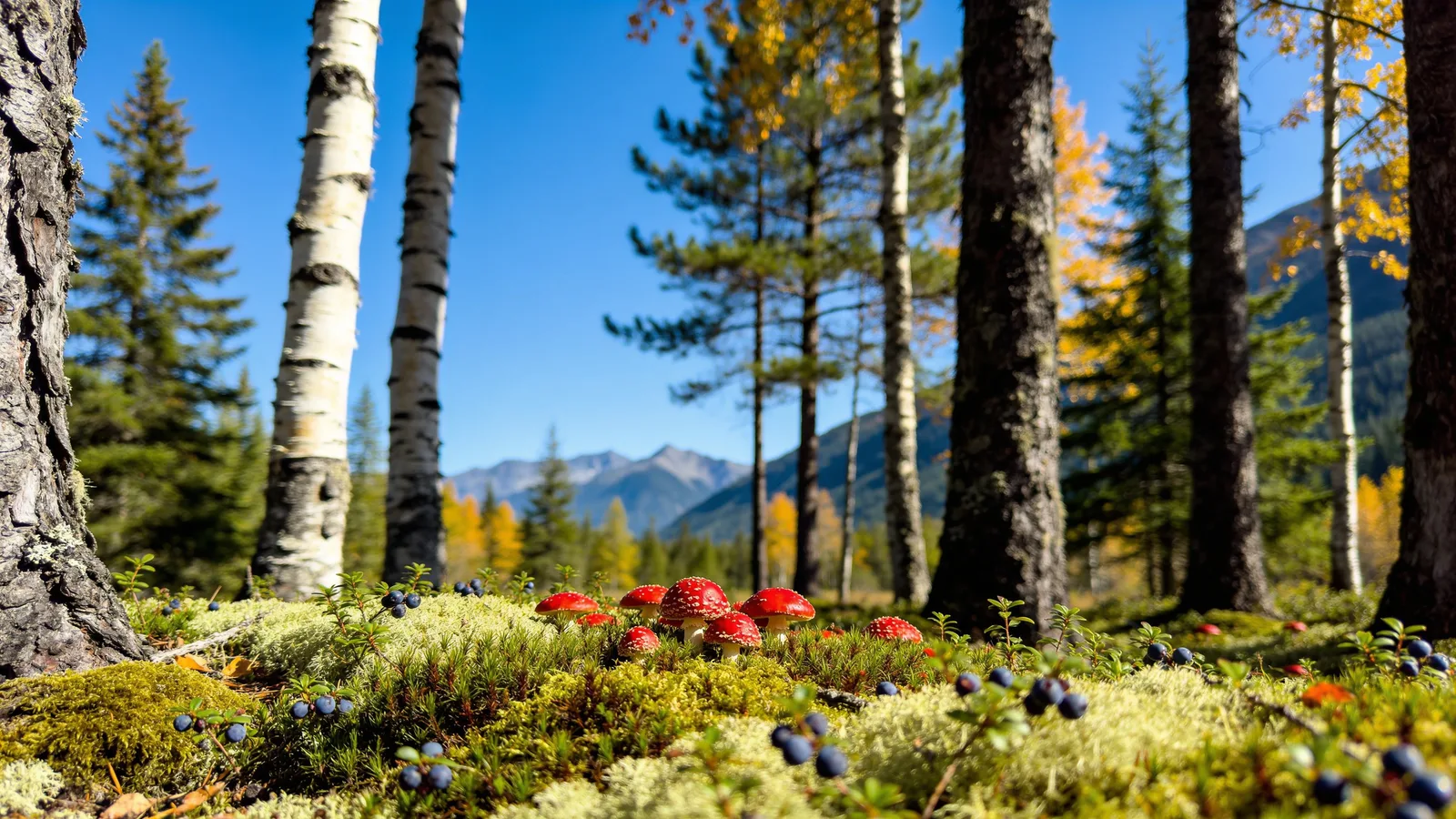
Where fly agaric grows in Canada - shield, mountains and coast
A habitat map for Amanita muscaria: the trees it partners with, the ground it likes, the two-week window when the red caps rise, and the corner of British Columbia our own caps come from.
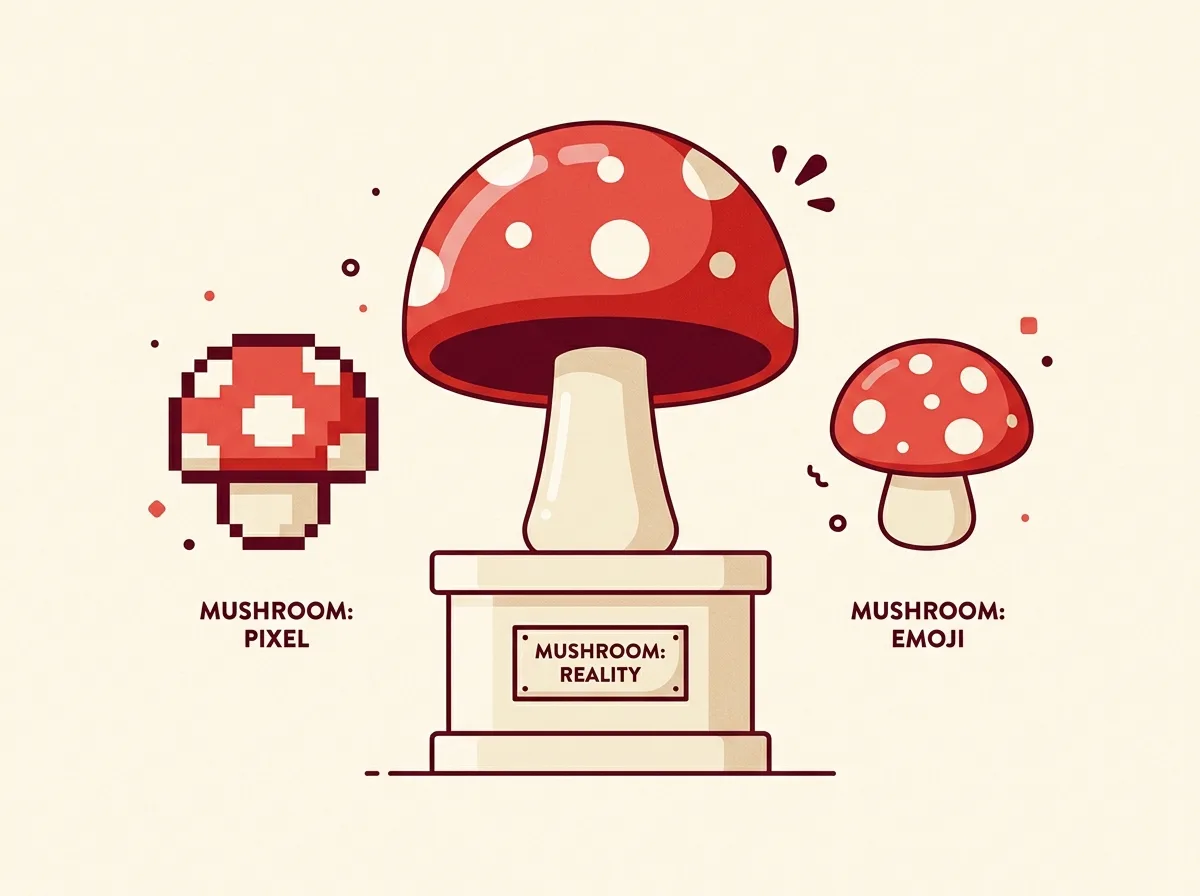
From Mario to the Mushroom Emoji 🍄, how the fly agaric conquered pop culture
A power-up, a Smurf village, a keyboard glyph on two billion phones: why the one mushroom everyone can draw is Amanita muscaria, and nobody notices.
botanical specimen · not for consumption · 19+