Baba's Forest - Slavic whispers
Мухомор: the fly-killer at the window, the trickster of the fairy tale, and the red cap that Slavic folk art never stopped painting.
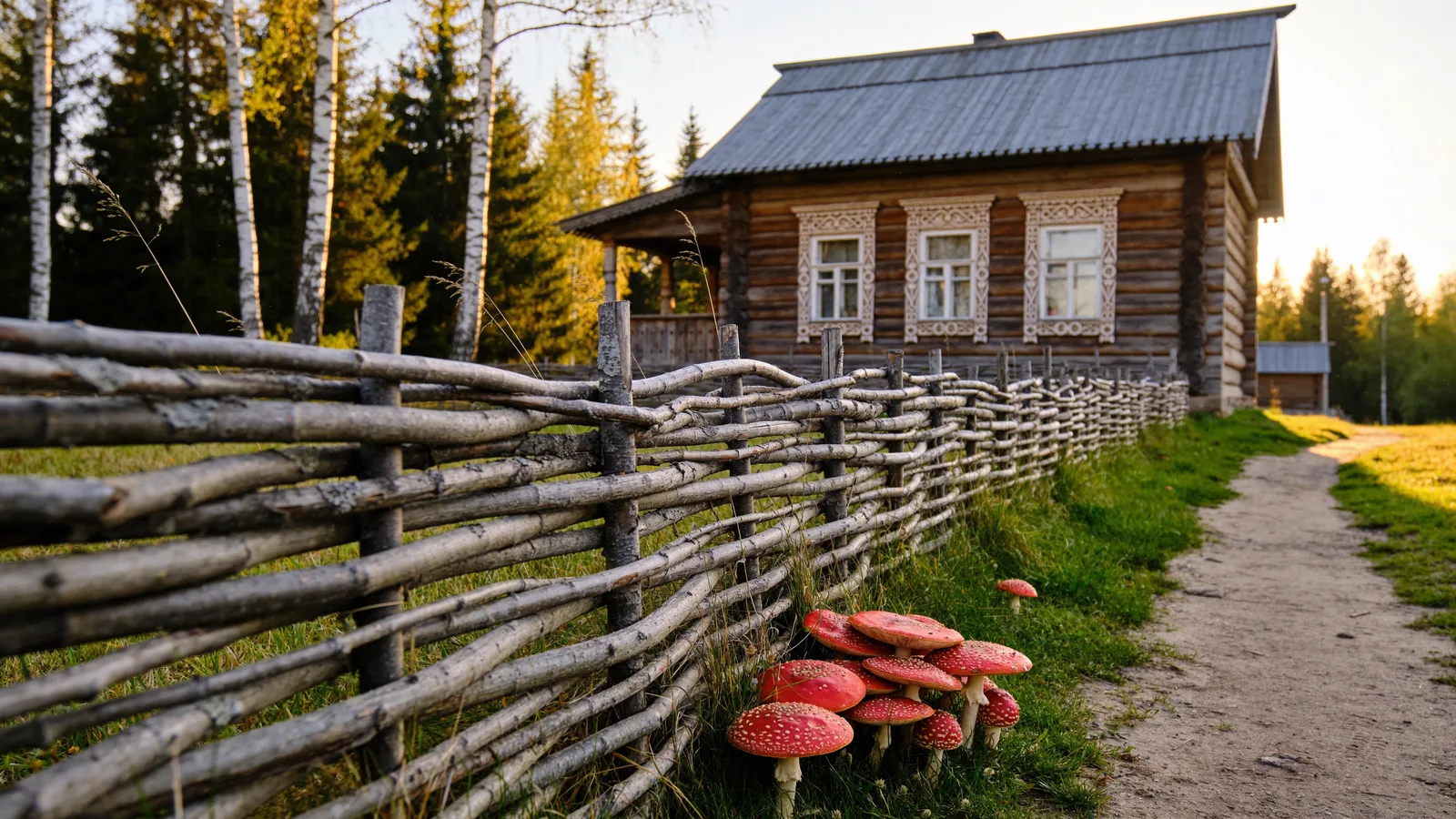
Red fly agaric mushrooms by a wattle fence at the edge of an old Slavic village, wild мухомор of the kind sold as dried Amanita muscaria caps in Canada
TL;DR
- The Slavic name мухомор, “fly-death”, preserves the oldest documented European use of the mushroom: a windowsill fly trap, not a food.
- It is absent from the heroic byliny and turns up instead in the comic songs beside them, where the mushrooms go to war and the мухомор is the disreputable one.
- In the wonder tales the fly agaric is scenery with an opinion: it marks the border where the village ends and Baba Yaga’s jurisdiction begins.
- Illustrators like Bilibin, more than any storyteller, made the red cap the official flag of the deep Slavic forest.
- Folk art painted it on spoons, trays and Christmas ornaments as a charm of luck - always to be looked at, never eaten.
- We continue the looking. Botanical specimen · not for consumption · 19+.
A name that is a warning label
Most languages needed a phrase to warn about this mushroom. The Slavs fit it into one word. Мухомор, fly-death, is a compound of utility and threat, coined for the old practice of crumbling a cap into a saucer of sweetened water or milk to stun the flies of a summer kitchen. The habit was common enough across Eastern Europe that it crossed into Latin (muscaria, from musca, fly) and into English, where “fly agaric” still carries the same windowsill.
That origin matters. The first documented Slavic relationship with the red cap was pest control, a poison openly labelled as one, kept at arm’s length, useful precisely because it was dangerous. The folk knowledge and the caution arrived together and were never separated. Nobody in that kitchen was confused about what was on the saucer.
It is a strange fate for a mushroom, to be named after what it does to something else. Amanita muscaria (fly agaric, мухомор красный) has no other name in Russian that anybody uses. The word is the whole story, told in nine letters, and children learn it before they learn to read.
What the epic songs do not say
Go looking for it in the byliny and you will come back empty-handed. The heroic songs belong to Ilya Muromets, Dobrynya Nikitich, Alyosha Popovich and Volkh Vseslavievich. They are full of horses and rivers and Kiev and impossible boasts, and there is no mushroom anywhere near any of it. Whatever the red cap was to the people who sang those songs, it was not epic material.
Take one step sideways, though, into the comic genres, and there it is.
The скоморошины and небылицы, the songs of the wandering performers, worked by turning the world upside down: animals hold court, objects argue, and the small things of the household get promoted to the rank of general. The oldest Russian collection of any of this, the one collected by Kirsha Danilov and printed from a manuscript of the eighteenth century, keeps the heroic songs and the joking ones side by side, on the same pages, in the same voice. Whoever sang about Dobrynya also sang the nonsense, and the collection has never bothered to separate them.
One of those pieces is the mushroom war. In the tale version, Tsar Gorokh makes war on the mushrooms, and the boletus, sulking that berries get all the attention, appoints himself colonel and starts recruiting. He goes down the ranks: the белянки refuse, the рыжики decline on the grounds that they are wealthy men and above such things, the волнушки and the опёнки each find an excuse, and in the end only the грузди agree to march. Then a woman named Varvara comes into the forest, collects the entire army, sorts it by species and salts it. That is how the war ends.
The мухомор is not on the muster roll. It is not in the tale at all, and the tale names eight other mushrooms by name.
That absence is not an oversight, and folklorists reading the poetics of these songs have made the point cleanly: the mushrooms in them are social ranks, each one standing for a kind of person, and the fly agaric belongs to a different category altogether. It is the поганый mushroom, the unclean one, and in a song where every fungus maps onto a human type, it maps onto the sort of conduct nobody wants in the ranks. Too disreputable to be recruited. Too well known to be left out by accident.
So the red cap is in the folk tradition the way a bouncer is at a party. Not on the guest list, standing at the door, and everybody knows exactly who it is. The wild caps we dry are the same mushroom that got itself excluded from a war it was never invited to.
The border-post of the tales
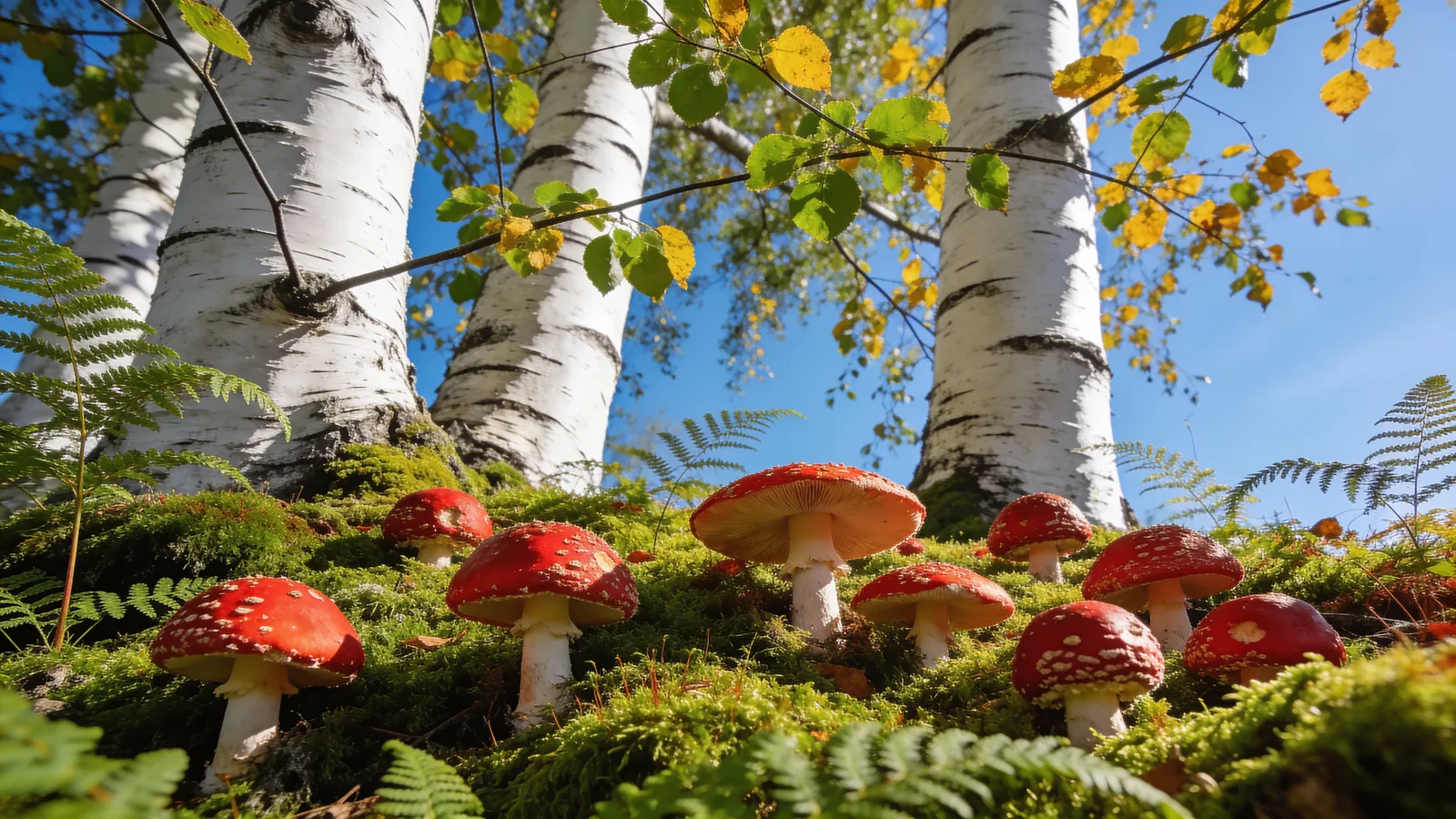
Slavic wonder tales are unusually precise about geography. There is the village, with its fences and its rye. There is the field. And then there is the tyomny les, the dark forest, where the rules change and stay changed until you come out the other side. Baba Yaga’s hut on hen’s legs stands in the deepest part of it, ringed by a fence of bones, turning to face whoever is rude enough to arrive without the right words.
She is not a witch in the western sense and the tales never quite settle what she is. She eats people, she gives people horses, she asks impossible questions and then answers them herself. She is the customs officer of the other world, and the only consistent thing about her is that the forest is hers and you are in it.
The tales rarely name mushrooms outright. But when the illustrated editions came, above all Ivan Bilibin’s from 1899 onward, the artists needed one plant that could say “you are now past the last safe tree”, and they reached for the same one every time. A cluster of red caps at the path’s edge became the genre’s border-post: passed by Ivan Tsarevich on his way in, glowing quietly in the corner of the witch’s clearing, drawn with the same care as the embroidery on his sleeve.
The mushroom entered the canon through the eye rather than the ear, and it never left. Ask anyone who grew up on those books to draw the dark forest and there will be a red cap in it, whether or not they can tell you why.
Luck, painted on
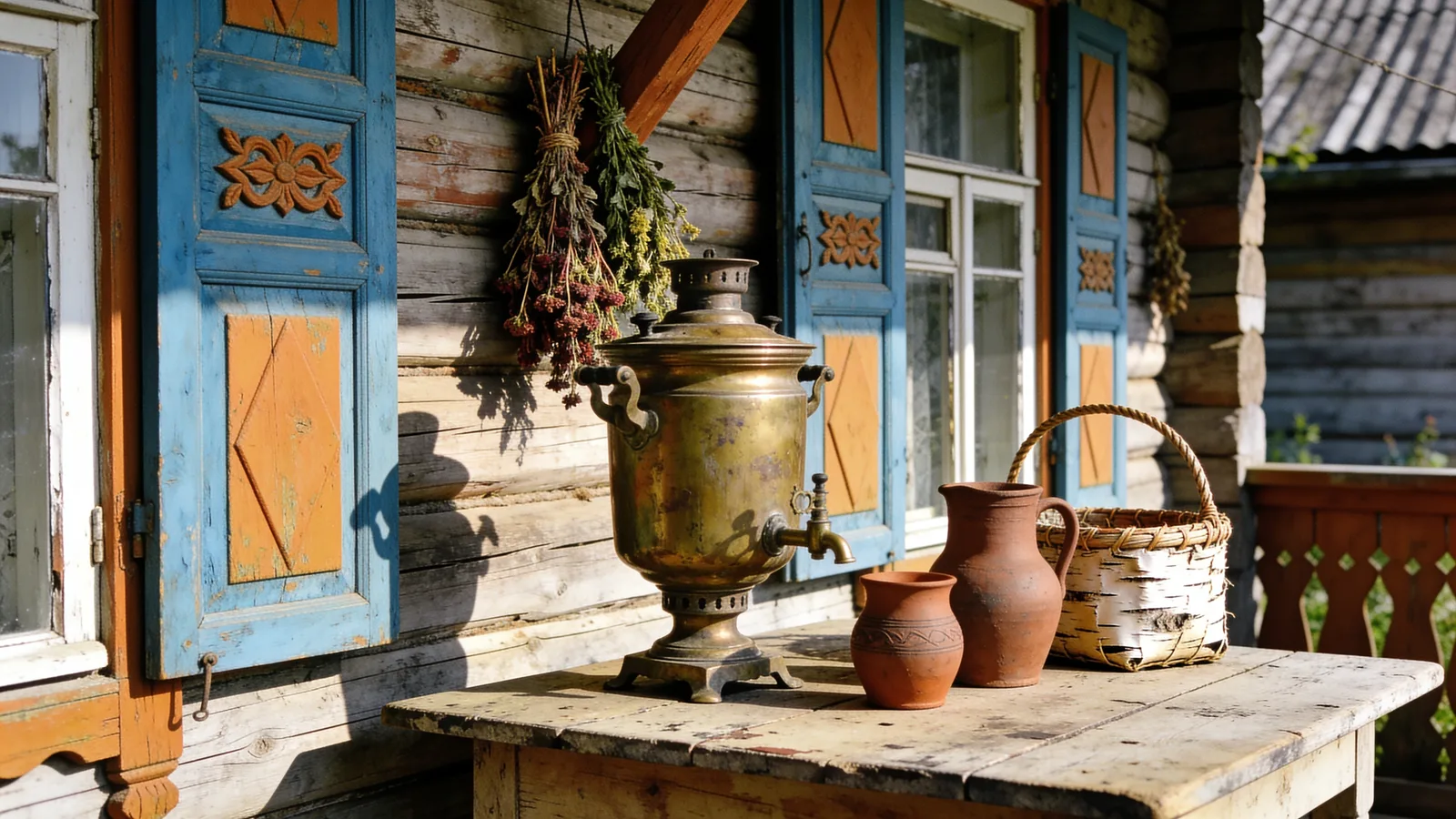
Step out of the forest and into the izba, and the fly agaric changes jobs.
On painted spoons and trays, on carved distaffs, on glass New Year ornaments from the nineteenth century through the Soviet decades and out the other side, the red cap with white flecks appears beside strawberries and firebirds as a token of luck and small abundance. Like the horseshoe, it was lucky as an image: a domesticated picture of a wild danger, the way a lion on a coat of arms is not a lion in the yard.
The same household that hung a glass mushroom on the tree in December had used a real one on the windowsill in July to kill flies, and saw no contradiction in it at all. Folk culture is comfortable holding two ideas about a thing. It is only modern writing about folk culture that keeps trying to make it pick one.
Mushroom-picking itself, tikhaya okhota, the quiet hunt, remains the great Slavic forest ritual, and every child on that hunt learns the мухомор first. Admire it, photograph it, leave it standing. It is the one mushroom everyone can identify and no one takes home for the pot: a specimen culture, centuries before anybody needed the word.
The same red, further west than it knows
The birch and spruce forest that raised these stories does not reach British Columbia, and the mushroom does not appear to care. It travels further than any single forest does, and it comes up in our coastal valleys under birches that would look perfectly ordinary to anybody from Novgorod. When we brush the needles off a cap at dawn we are standing in a far suburb of Baba’s forest: different trees overhead, the same red at the path’s edge, the same old agreement still in force.
Look closely. Touch nothing you cannot name. Keep the beautiful dangerous thing behind glass, in our collection, where it has always done its best work.
Botanical specimen · not for consumption · 19+. Folklore is not guidance; fresh Amanita muscaria is toxic - a raw cap is loaded with ibotenic acid, which careful drying and curing convert largely into muscimol.
Questions, answered
What does "мухомор" mean?
Literally 'fly-death' - from mukha (fly) and mor (plague, death). The name records the old household practice of leaving a cap in sweetened water on the windowsill to stun flies, which is also where the English 'fly agaric' comes from.
Does the fly agaric appear in the Russian byliny?
No. The heroic epic songs belong to Ilya Muromets and Dobrynya, and no mushroom rides with them. It turns up one genre sideways, in the скоморошины and небылицы sung by the same performers and printed in the same collections, where mushrooms muster for war and the мухомор is cast as the disreputable one.
Is Baba Yaga connected to mushrooms in the original tales?
Not explicitly. Baba Yaga rules the deep forest where the tales' mushrooms grow, and later illustrators surrounded her hut with red caps so consistently that the association became canon by image rather than by text.
Why is the fly agaric everywhere in Slavic children's books if it is toxic?
Precisely because, raw and fresh in the forest, it is toxic - a fresh cap is loaded with ibotenic acid. The unmistakable red-and-white cap made a perfect visual shorthand for 'beautiful, but do not touch' - a warning children could recognize before they could read.
Is anything on this site meant to revive folk uses of the mushroom?
No. We document folklore; we do not instruct. Fresh Amanita muscaria is toxic: a raw cap is loaded with ibotenic acid, which drying and curing convert largely into muscimol. And ShroomsBloom pouches are botanical specimens for collection and study only. 19+.
Sources & further reading
- Amanita muscaria - etymology and the fly-trap tradition
- Древние Российские стихотворения, собранные Киршею Даниловым - academic edition, full text (ФЭБ)
- Т. Л. Татаринова. Черты поэтики скоморошин и небылиц и их отражение в других смеховых жанрах, 2017
- «Война грибов», русская народная сказка - полный текст
- Baba Yaga in Slavic folklore
- Ivan Bilibin - the illustrations that fixed the forest's image
- Khokhloma and folk-art plant motifs
Keep reading

Was Santa a Mushroom? The red-and-white theory, weighed
Flying reindeer, a red-and-white visitor, gifts through the smoke-hole: the famous theory that Santa Claus is a folk memory of the fly agaric - and what folklorists actually say.
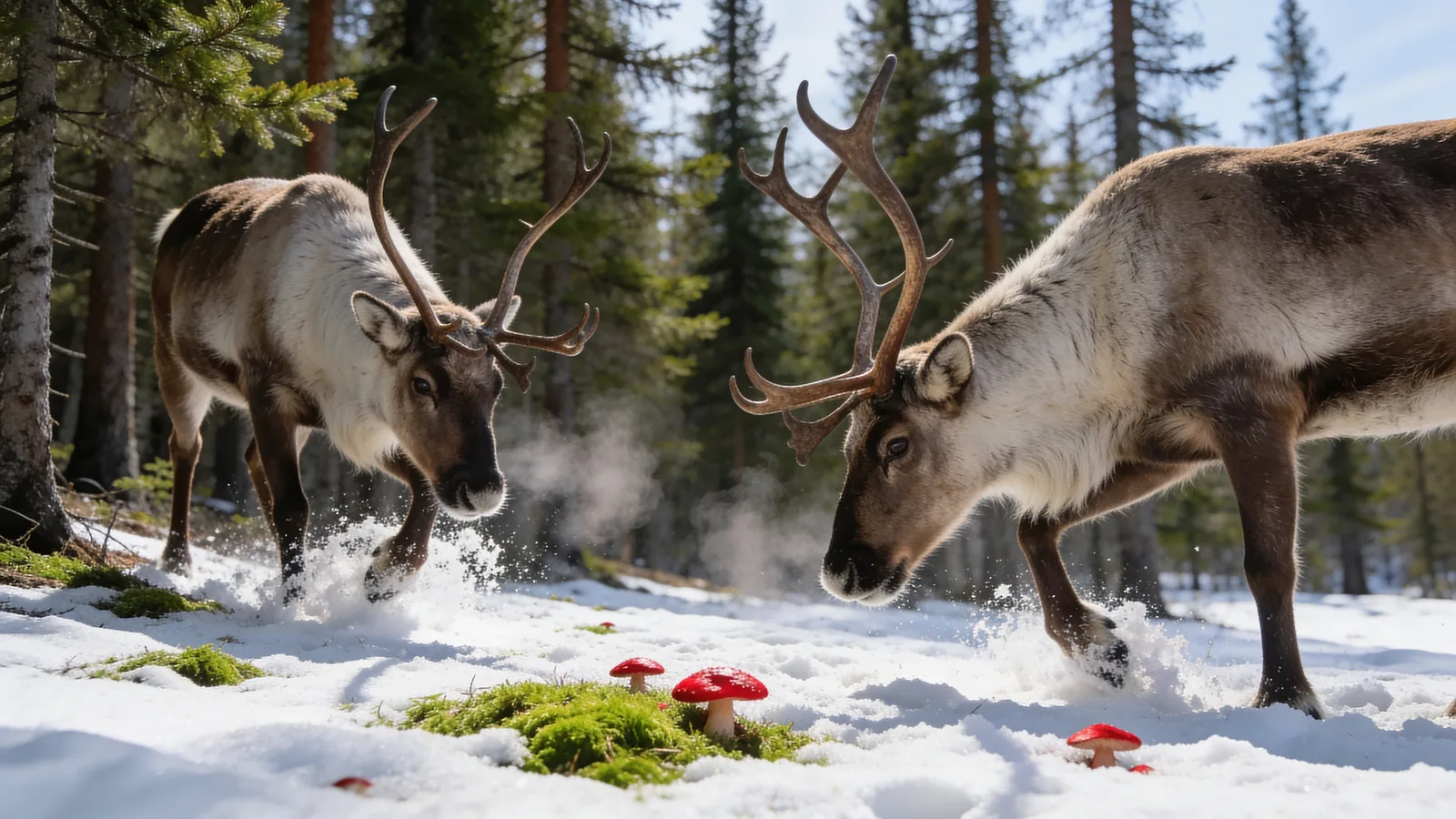
Reindeer & Drum - Siberia's red cap
The steppe's oldest field note: how Koryak and Evenki tradition carried the fly agaric through winter, and why a red-and-white gift-giver still flies with reindeer.
botanical specimen · not for consumption · 19+