Was Santa a Mushroom? The red-and-white theory, weighed
Flying reindeer, a red-and-white visitor, gifts through the smoke-hole: the famous theory that Santa Claus is a folk memory of the fly agaric - and what folklorists actually say.
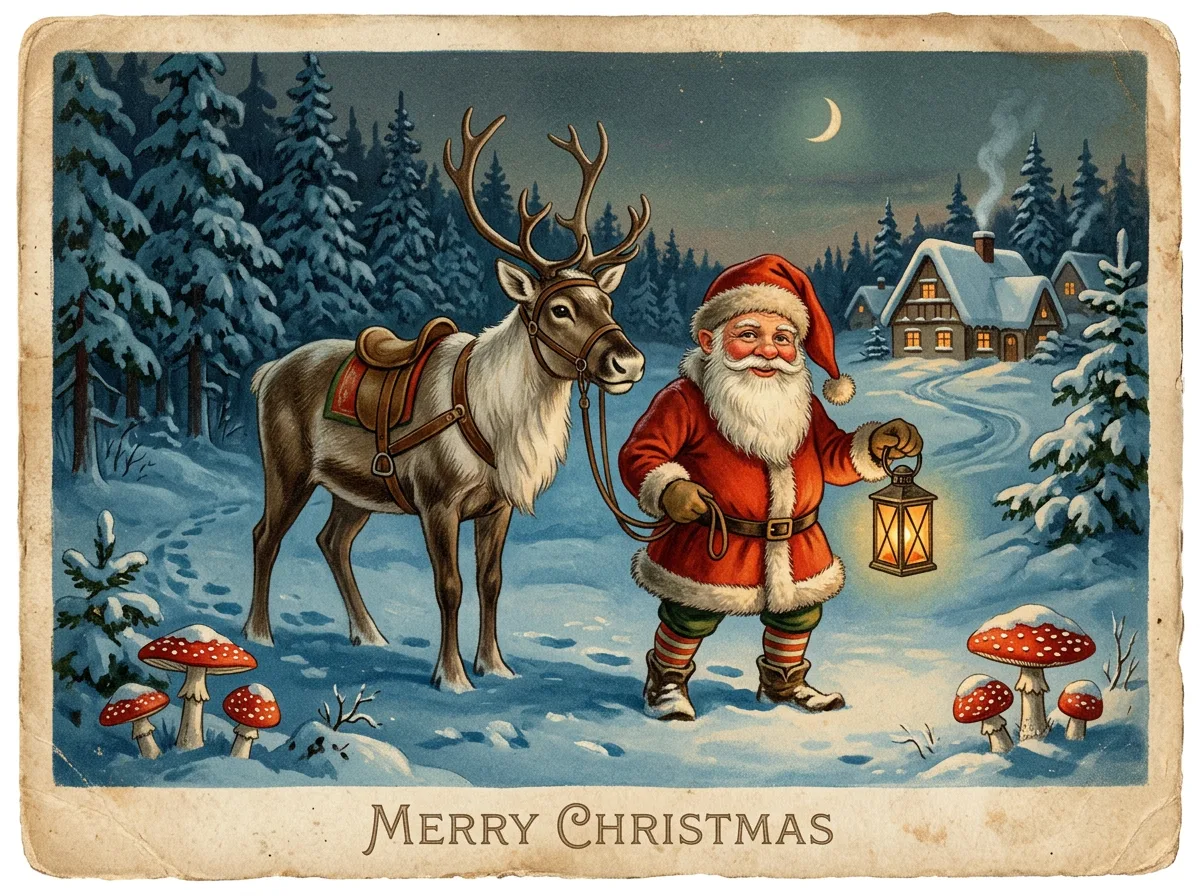
Vintage Christmas postcard style illustration, red-and-white gnome with a reindeer beside fly agaric mushrooms in snow
TL;DR
- The theory: Santa’s red-and-white suit, flying reindeer and chimney entrance echo Siberian winter rituals around dried Amanita muscaria.
- The coincidences are real: the colours match, reindeer genuinely seek the mushroom, and winter yurts were entered through the smoke-hole.
- The documentation is not: historians trace Santa cleanly through St. Nicholas → Sinterklaas → Moore’s poem → magazine art. No Siberian link survives scrutiny.
- Verdict: a beautiful modern myth ABOUT a myth - worth telling honestly, with the caveats attached.
- The mushroom itself is real and Canadian: dried Amanita muscaria caps in our collection. Botanical specimen · not for consumption · 19+.
The case for the mushroom
Lay the two pictures side by side and the theory almost argues itself. A figure dressed in red and white. Reindeer that fly. A sack of gifts carried into the home not through the door, snowed shut in a Siberian winter, but down through the smoke-hole in the roof. Even the pine tree with bright parcels underneath has a suspect: Amanita muscaria fruits at the base of conifers, red parcels under a green tree, exactly where the presents go.
Add the documented facts from Siberia’s red cap, reindeer really do dig for fly agaric through snow, dried caps really were valued winter goods among Koryak and Chukchi households, and you have the most seductive folklore theory of the twentieth century.
The case against it
Then the historians clear their throats. The modern Santa has an unusually well-documented pedigree: the Byzantine cult of St. Nicholas, the Dutch Sinterklaas brought to New Amsterdam, Clement Clarke Moore’s 1823 «A Visit from St. Nicholas» (which invented most of the sleigh logistics), Thomas Nast’s illustrations, and twentieth-century advertising that fixed the red suit. Every link in that chain is on paper. No link reaches Siberia.
The theory’s fans answer that folk memory travels underground, without paper. Perhaps - but that is exactly the kind of argument that cannot be tested, and folklorists have learned to be wary of patterns that explain everything and predict nothing.
What survives the argument
Strip away the strong claim («Santa IS the mushroom») and something true remains: the fly agaric was part of northern winter imagery long before Coca-Cola. It stands on Victorian and Edwardian Christmas cards as a luck token beside holly and horseshoes. It grows under the very species of tree we bring indoors in December. Whatever Santa’s genealogy, the red-and-white mushroom earned its place in the season’s iconography on its own.
That much you can hold in your hand. The caps in our archive are the same species the whole argument circles around - wild, Canadian, dried and vacuum-sealed, sold as botanical specimens for collection and study. The theory stays a story; the mushroom is real.
Botanical specimen · not for consumption · 19+. Folklore is not guidance; fresh Amanita muscaria is toxic - a raw cap is loaded with ibotenic acid, which careful drying and curing convert largely into muscimol.
Questions, answered
What is the Santa,mushroom theory in one sentence?
That the modern Santa Claus, red-and-white suit, flying reindeer, entry through the chimney, gifts in a sack, preserves a folk memory of Siberian winter rituals in which dried Amanita muscaria, red and white, was carried into yurts through the smoke-hole.
Do scholars accept it?
Mostly no. Historians trace Santa through St. Nicholas, Dutch Sinterklaas, Clement Clarke Moore's 1823 poem and 19th-20th-century illustration. The mushroom theory is treated as a suggestive modern overlay - fun to think with, impossible to document.
Where did the theory come from?
It circulated in mid-20th-century ethnobotany circles after R. Gordon Wasson's work on Siberian mushroom use, and was popularized in essays and documentaries from the 1960s onward.
Does ShroomsBloom sell the mushroom from the theory?
We sell wild Canadian Amanita muscaria, the same red-and-white species, strictly as a botanical specimen for collection and study. Not for consumption. 19+.
Sources & further reading
Keep reading
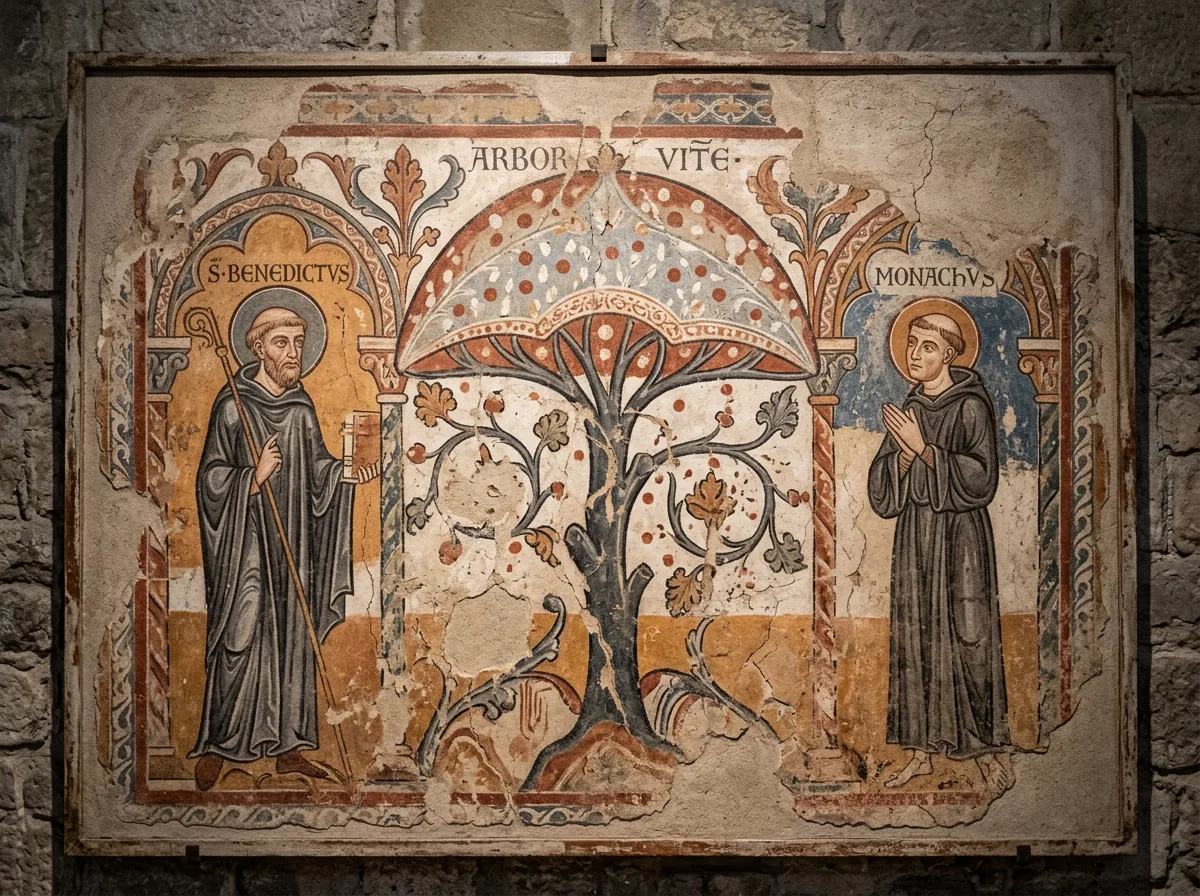
The Red Cap in Church and Parlour - frescoes, icons, and Victorian England
From the Plaincourault fresco to Alice's caterpillar: eight centuries of the fly agaric hiding in plain sight - in chapels, manuscripts, icons and Christmas cards - and the fierce scholarly fight over what it means.
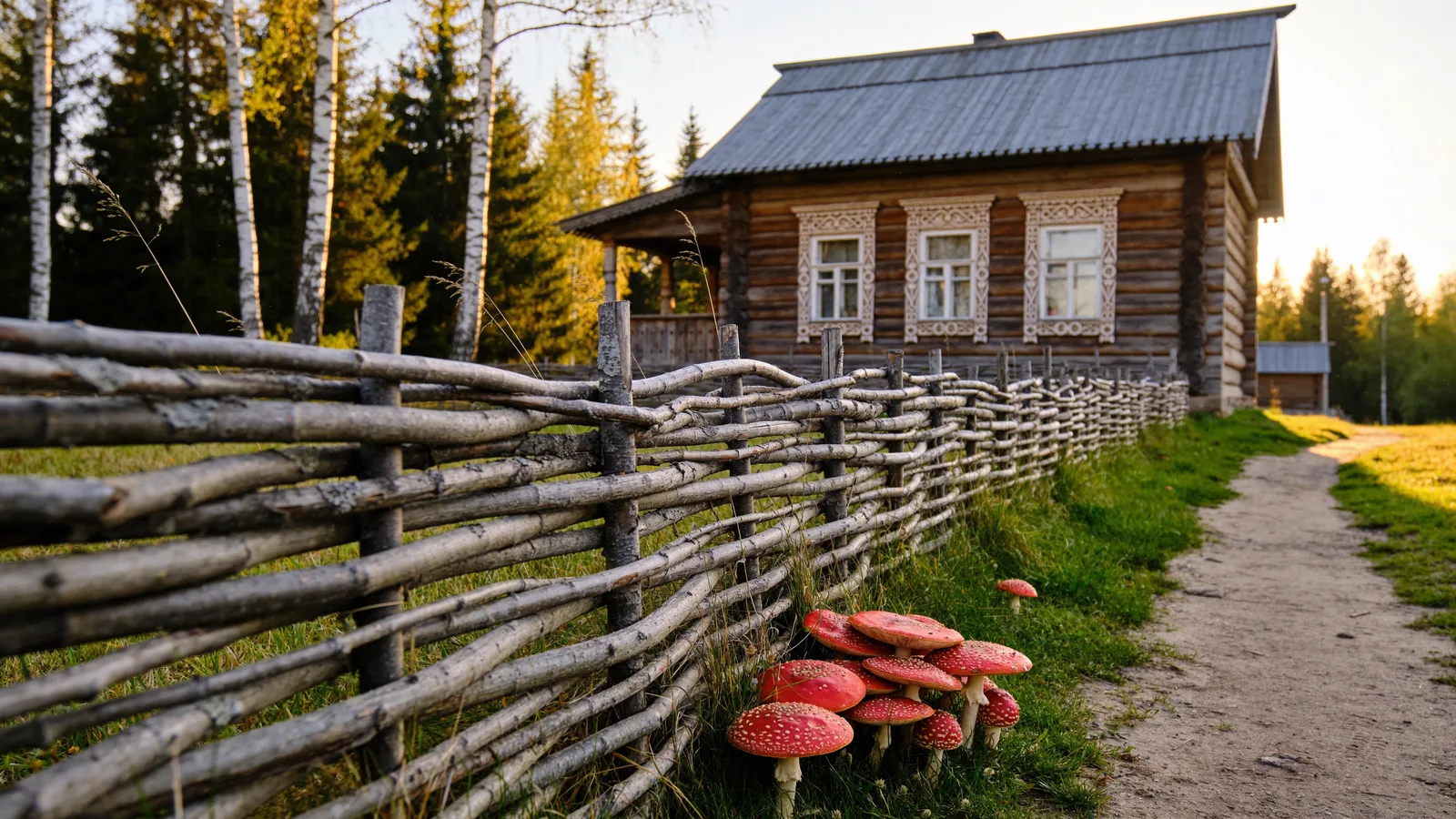
Baba's Forest - Slavic whispers
Мухомор: the fly-killer at the window, the trickster of the fairy tale, and the red cap that Slavic folk art never stopped painting.
botanical specimen · not for consumption · 19+